
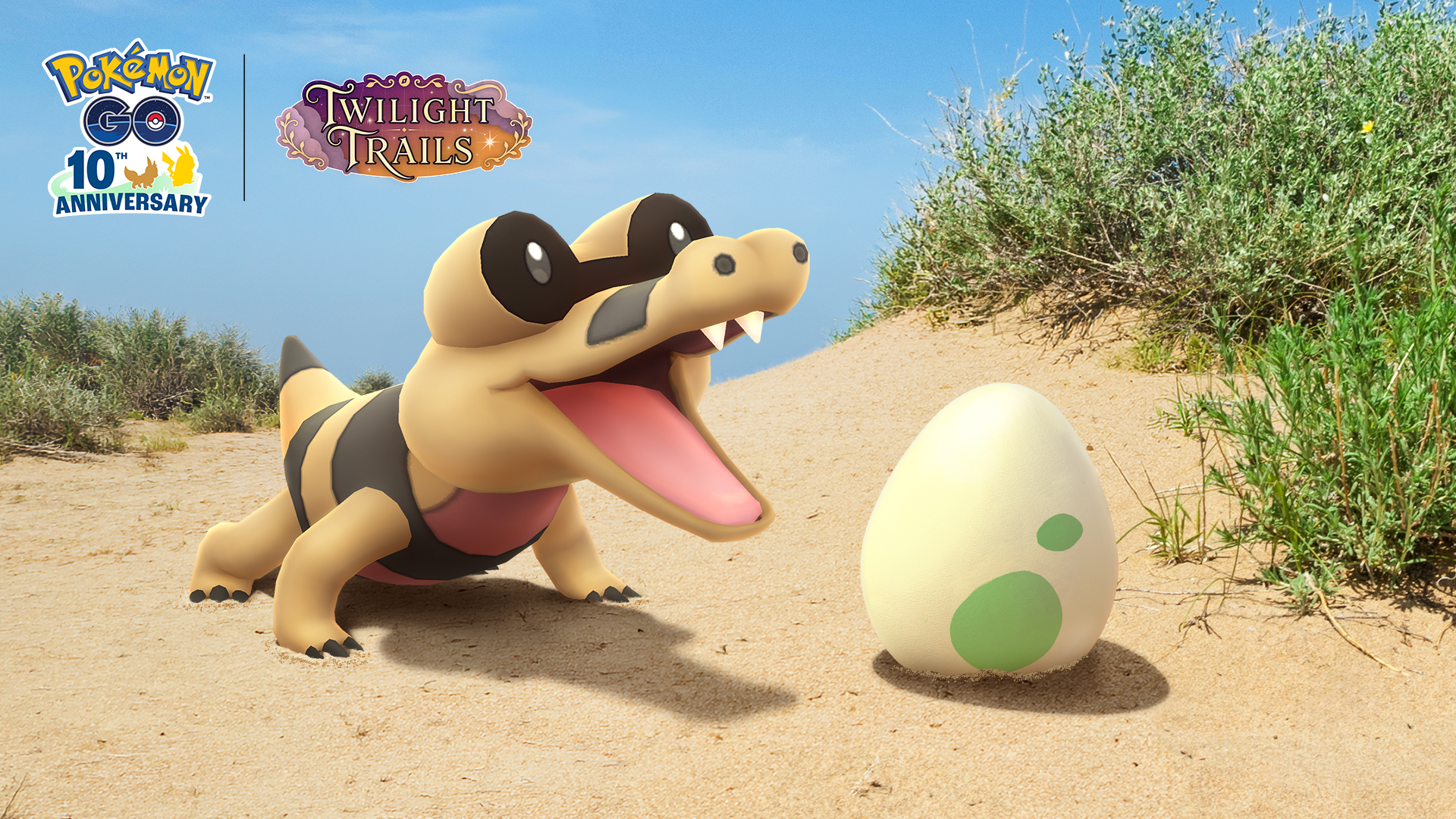
Pokémon GO’s Sandile Hatch Day takes place Saturday, October 17, 2026, from 11:00 a.m. to 5:00 p.m. local time. Sandile will appear much more often in 2 km Eggs, with a boosted chance of hatching its Shiny form. The event is simple, but clearing egg space before it starts will matter more than any complicated route.
Sandile Hatch Day time in the United States
The event uses local time. It runs from 11:00 a.m. to 5:00 p.m. in every US time zone, including Eastern, Central, Mountain, and Pacific time. You do not need to convert from a single global start.
The free and paid Timed Research also expires at 5:00 p.m. local time. Complete the tasks and claim every reward before the event ends. Unclaimed rewards can disappear when the timer reaches zero.
Scopely lists the complete schedule and rewards on the official Pokémon GO event page.
What are the event bonuses?
- Sandile hatches much more frequently from 2 km Eggs.
- There is an increased chance of hatching Shiny Sandile.
- Eggs require half the normal walking distance.
- Hatching an Egg awards twice the normal Candy.
- PokéStops have an increased chance of giving 2 km Eggs.
- Free Timed Research awards an Incubator and XP.
A normal 2 km Egg therefore requires 1 km during the free event. Scopely warns that these distance and Candy bonuses do not stack with bonuses from other Pokémon GO events or GO Passes.
How to prepare before 11 a.m.
Clear egg slots first. Sandile comes from event 2 km Eggs, not from wild spawns. If your storage is full when the event begins, walking and spinning stops will not produce the eggs you want. Hatch older short-distance eggs beforehand and avoid filling the open slots again.
Wait to spin PokéStops. Once the event is live, stops have an increased chance of awarding 2 km Eggs. Save your first spins for after 11:00 a.m. local time, then keep moving through an area with several accessible stops.
Use the free Incubator constantly. The half-distance bonus drops each event 2 km Egg to 1 km. Put paid Incubators on longer eggs only if you need to create space quickly. The goal is to cycle through as many event eggs as your route and storage allow.
Leave time to claim research. Do not wait until 4:59 p.m. to open the Research tab. Both versions of Timed Research expire at the event’s end.
Is the $1.99 ticket worth it?
The paid Timed Research costs $1.99 in the United States. It unlocks a one-quarter hatch-distance bonus during Sandile Hatch Day, reducing a 2 km Egg to 0.5 km. Its task rewards include one Star Piece, two Super Incubators, and additional items.
The ticket makes sense for players who plan to walk for a meaningful part of the six-hour window and already have several open egg slots. Cutting the event distance from 1 km to 0.5 km lets the same route hatch roughly twice as many 2 km Eggs, assuming a steady supply from PokéStops.
Skip it if you can only play briefly, cannot walk much, or have no practical way to clear existing eggs. The free event already provides half hatch distance, double hatch Candy, and a free Incubator through Timed Research. The ticket improves efficiency, but it does not guarantee a Shiny Sandile.
Best plan for the event
Start with open egg slots, spin a cluster of PokéStops after 11:00 a.m., and keep 2 km Eggs in your free Incubator. Check the Timed Research early, then claim everything well before 5:00 p.m. Players preparing for more October events can also use our Pokémon GO Zorua Community Day guide as a storage and item checklist.
Most importantly, treat “increased chance” as a boost, not a promise. No official Shiny rate has been published. The useful advantage is that careful egg-slot management gives you more legitimate attempts without wasting the short event window.