
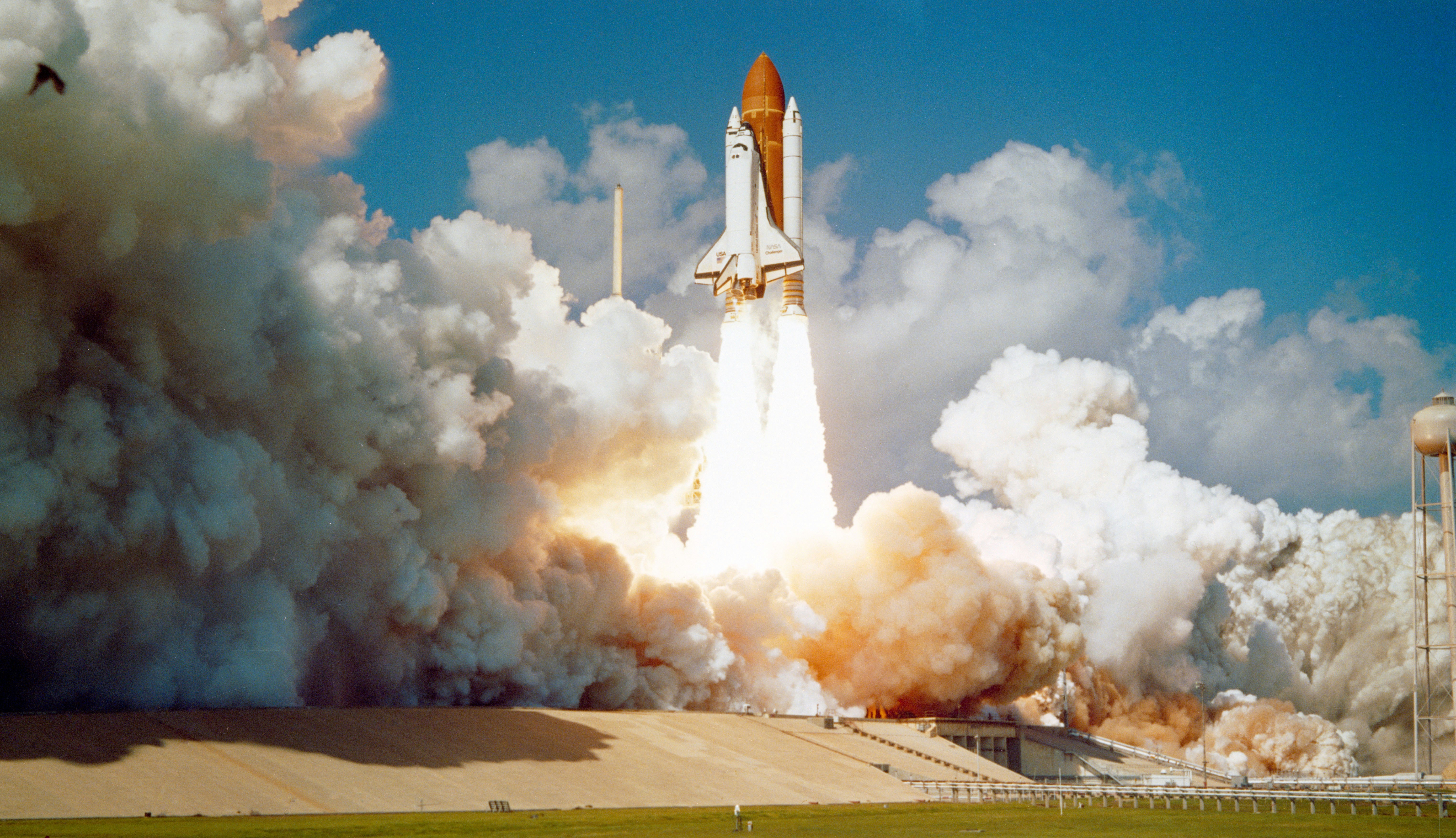
World Space Week 2026 is underway from October 4 through October 10, and this year’s theme is “Rocket Revolution.” The phrase sounds dramatic, but it describes a real change: reaching orbit is no longer the exclusive business of a few national space programs.
Why World Space Week always runs October 4-10
The dates are fixed because they bookend two milestones. October 4 marks the 1957 launch of Sputnik 1, the first artificial satellite. October 10 marks the 1967 entry into force of the Outer Space Treaty, the basic international framework for peaceful activity beyond Earth.
The United Nations formally established the observance in 1999. Its goal is not simply to celebrate rockets. The United Nations overview of World Space Week describes it as a way to show how space science and technology improve life on Earth, support education, and encourage international cooperation.
What “Rocket Revolution” means in 2026
For decades, a launch vehicle was mostly treated as disposable hardware. Stages were dropped into the ocean or burned up after doing their job. That made every mission an expensive exercise in building a new machine, testing it, and throwing away most of it.
The current revolution is about changing that rhythm. Reusable boosters can return for inspection and another flight. Commercial launch companies are increasing competition. Smaller launchers are giving universities, startups, and emerging space programs more ways to place payloads in orbit. The result is not cheap or easy access to space, but a faster and more diverse launch market.
Recent missions make the theme unusually concrete. Starship Flight 14 reached orbit before its early ending, showing both the progress and the difficulty of building a fully reusable system. Meanwhile, SpaceX Crew-13 carried astronauts to the International Space Station, a reminder that routine-looking launches still depend on precise engineering and years of testing.
The theme also covers more than dramatic booster landings. New manufacturing methods, rapid testing, improved engines, and smaller spacecraft all contribute to a launch ecosystem that can serve more kinds of missions than the old one-launch, one-payload model.
Why launch technology matters after liftoff
A rocket is only the delivery system. What it places in orbit can affect daily life for years. Satellites support weather forecasts, GPS navigation, communications, disaster response, climate monitoring, and scientific research. Lowering the technical and financial barriers to launch can make more of those services possible.
There are tradeoffs. More launches and more spacecraft increase concerns about orbital debris, crowded radio frequencies, local environmental effects, and fair access to useful orbits. Reusability also does not make every part of a rocket reusable. Some vehicles recover only the first stage, while upper stages and payload hardware may still be discarded.
That is why “Rocket Revolution” should not be read as a victory lap. It is a useful question: how can humanity launch more often without making near-Earth space harder to use safely?
How to take part in the United States
World Space Week events are organized locally, so the schedule varies by city. Science museums, planetariums, observatories, universities, schools, and model-rocket clubs are the best places to check. Some programs are streamed, which makes them accessible even when no in-person event is nearby.
You do not need a formal event, either. A family can build a simple paper-rocket experiment, compare different fin shapes, track a visible satellite, or use a free sky map to identify planets. The point is to turn a giant subject into something observable and testable.
The simplest way to understand the theme
Think of the Rocket Revolution as a shift from rare, custom launches toward a more active transportation system. The hardware is becoming more reusable, the customer base is widening, and launch cadence is rising. That makes space more useful, but it also makes responsible engineering and clear rules more important.
World Space Week 2026 is therefore about more than spectacle. It is a chance to understand the infrastructure above us, the machines that put it there, and the decisions that will shape the next phase of the space age.