
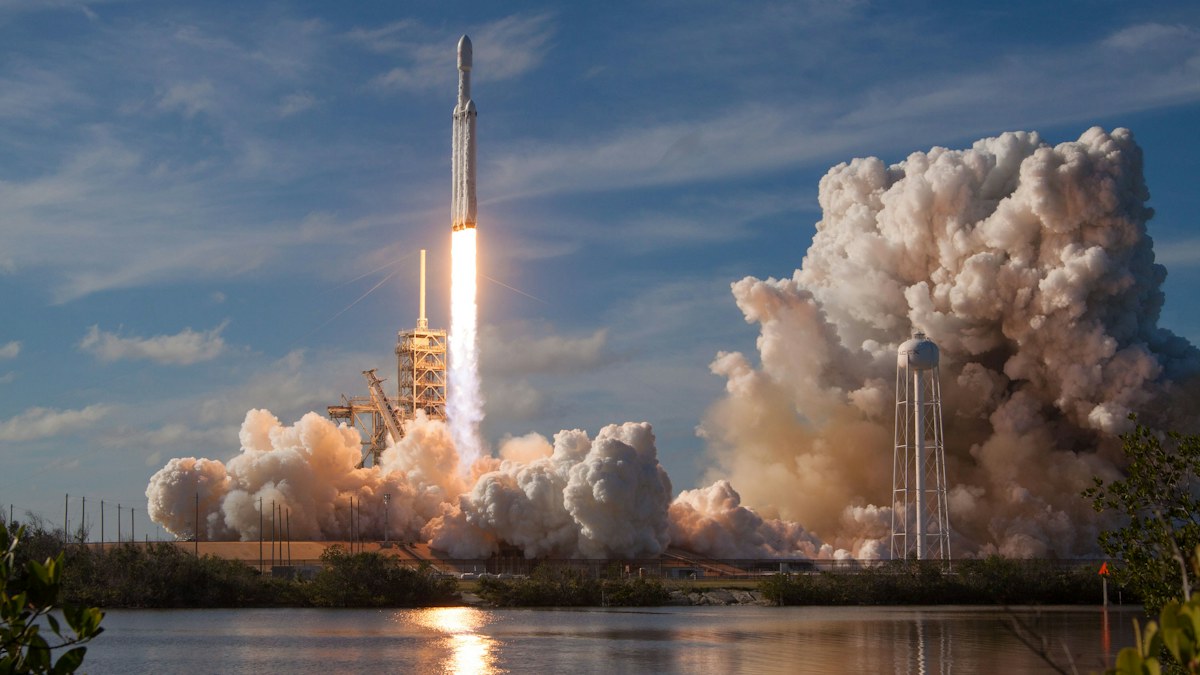
SpaceX’s Starship reached Earth orbit for the first time on September 28, 2026, and deployed 26 operational Starlink satellites. That makes Flight 14 a genuine milestone. It was not, however, the clean 10-hour mission SpaceX had planned. Engine problems forced an early return, and the vehicle’s Pacific splashdown was rough enough to damage it.
The most useful way to read the flight is not as a simple success or failure. Flight 14 proved several abilities Starship had never demonstrated together, while also exposing reliability problems that must be solved before the rocket can fly long missions or become routinely reusable.
What happened during Starship Flight 14?
Starship lifted off from Starbase, Texas, at about 7:49 a.m. Central Time. The Super Heavy booster separated from the upper-stage ship and later splashed down in the Gulf of Mexico. At least one booster engine had failed during ascent.
The upper stage also lost one of its six Raptor engines on the climb. SpaceX still proceeded with the orbital insertion burn. Roughly 25 minutes after liftoff, controllers confirmed that Starship was in orbit, the first time the vehicle had completed that step.
The payload door then opened and released 26 Starlink satellites. SpaceX said it established communication with the first satellites as deployment continued. That matters because earlier Starship tests had carried simulators or satellites intended to burn up. Flight 14 carried operational spacecraft meant to join the network.
A live report from the San Antonio Express-News recorded the flight’s timeline and SpaceX commentary as events unfolded.
Why did the mission end early?
The original profile called for nearly 10 hours in space, about six trips around Earth, and a splashdown in the Pacific west of Chile. After reviewing the engine issues and onboard systems, the team chose to deorbit much sooner.
The spacecraft completed its deorbit burn and began reentry after only a few hours. It came down in the northern Pacific instead of following the full planned route. SpaceX’s cameras showed plasma building around the heat shield during descent, so engineers still received valuable data from a real orbital reentry.
Starship reached the water, but the splashdown was not as gentle as the previous flight’s. The vehicle was damaged and partially exploded after contact with the ocean. The result confirms that reaching a target splashdown zone and surviving it intact are separate engineering challenges.
What Flight 14 successfully demonstrated
Three achievements stand out. First, Starship entered a stable enough orbit to complete payload operations. Second, it deployed a full set of 26 operational Starlink satellites. Third, it performed a controlled deorbit and returned through the atmosphere after orbital flight.
Those steps are more demanding than a short suborbital arc. Orbital flight requires precise speed, navigation, thermal management, communications, and a reliable way to slow the spacecraft before reentry. The official SpaceX mission page describes Starship as a reusable system for carrying crew and cargo to orbit, the Moon, and beyond. Flight 14 moved the program closer to that goal, but it did not demonstrate full reusability.
What still needs work
Engine reliability is the clearest issue. Failures occurred on both stages, and the upper-stage problem changed the mission plan. A future crewed or long-duration flight will need more margin and stronger evidence that propulsion systems can operate as expected from launch through deorbit.
Splashdown control also remains unfinished. Hitting the ocean is useful for testing, but a vehicle that breaks apart cannot be inspected, refurbished, and flown again. SpaceX eventually wants controlled landings and rapid reuse, which require much tighter control of the final descent.
Finally, the shortened mission means some long-duration objectives remain unproven. Six orbits would have tested power, thermal control, communications, and engine readiness over a much longer period.
Was Flight 14 a success?
It was a partial success with an important first. Starship reached orbit, deployed working satellites, and returned safely away from populated areas. Those are substantial achievements. The early deorbit, engine failures, and hard splashdown also show why a test flight should be judged against each objective instead of a single victory label.
The next flight will be most meaningful if it repeats the orbital milestones while keeping all engines healthy, staying in space for the planned duration, and finishing with a more controlled recovery.