
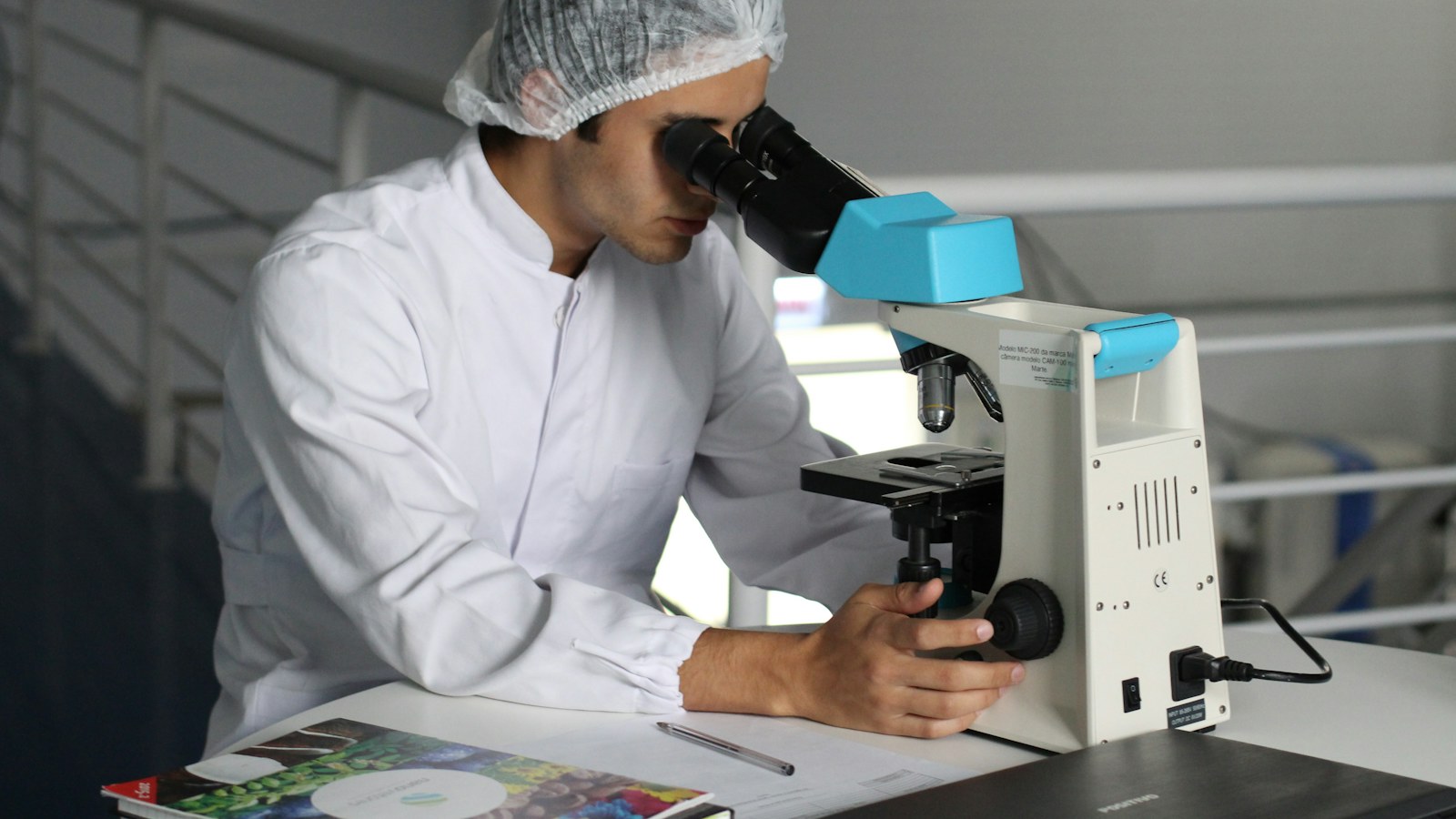
The 2026 Nobel Prize in Physiology or Medicine has gone to three scientists whose work gave neuroscience something it had long lacked: a precise switch for individual types of brain cells. Karl Deisseroth, Peter Hegemann, and Georg Nagel share the prize for discoveries that led to optogenetics, a method that uses light to turn selected neurons on or off in a living brain.
Who won the 2026 Nobel Prize in Medicine?
The Nobel Assembly announced the award on October 5, 2026. Deisseroth is a professor of bioengineering and psychiatry at Stanford University. Hegemann works at Humboldt University of Berlin, while Nagel is a professor at the University of Würzburg.
The official citation recognizes their discoveries involving light-gated ion channels and optogenetics. That wording points to a chain of research rather than one isolated experiment. Hegemann and Nagel uncovered a biological light switch. Deisseroth helped turn it into a tool capable of controlling mammalian neurons with extraordinary speed and precision.
Why did an alga matter to brain science?
The story begins with Chlamydomonas, a single-celled green alga that swims toward light. Hegemann wanted to understand how it could react so quickly. He and Nagel studied a protein called channelrhodopsin, located in the cell membrane.
When blue light hits channelrhodopsin, the protein opens a channel. Electrically charged ions flow through it, changing the cell’s voltage. In an alga, that response helps the organism navigate toward light. In a neuron, the same basic mechanism can trigger an electrical impulse.
Deisseroth introduced the gene for channelrhodopsin into rat nerve cells. In 2005, his team showed that a pulse of blue light could activate those modified neurons. The approach later worked inside the brains of living mice. A protein from algae had effectively become a remote-controlled switch for selected brain cells.
Why was optogenetics a breakthrough?
Older brain research methods could show that a region became active during a behavior, but correlation did not always prove that those cells caused the behavior. Electrical stimulation also affected mixed groups of nearby cells, making results difficult to interpret.
Optogenetics combines two kinds of precision. Genetic targeting makes only a chosen cell type sensitive to light. A laser or LED then activates or silences those cells on a millisecond timescale. Researchers can test what happens when a specific circuit is switched on, switched off, or stimulated in a carefully timed pattern.
This turned many neuroscience questions into direct experiments. Scientists have used the method to investigate circuits connected to movement, sleep, fear, reward, memory, addiction, and social behavior. The Karolinska Institutet’s official explanation describes optogenetics as the foundation of a new era for understanding how nerve cells create memories, feelings, and behavior.
Does this mean doctors can control a human brain with light?
No. The Nobel recognizes a transformative research tool, not a routine treatment that can manipulate a person’s thoughts. Standard optogenetic experiments require selected cells to carry a light-sensitive protein and require light to reach those cells. In deep brain tissue, that can involve genetic delivery and implanted optical hardware.
Those requirements make human treatment far more complicated than an experiment in cells or laboratory animals. Researchers are exploring medical uses, including attempts to restore useful vision by making retinal cells respond to light. Optogenetics is also helping scientists identify better targets for drugs, brain stimulation, and future therapies. Most applications involving the human brain remain experimental.
Why the prize matters now
Optogenetics did more than improve an existing microscope or scan. It changed the question from “Which part of the brain lights up?” to “What does this exact class of cells cause?” That shift from observation to controlled testing is why the method spread so rapidly across neuroscience.
For American readers, Deisseroth’s award also recognizes a major US contribution to the field. Stanford’s announcement of the 2026 Nobel Prize emphasizes how his work connected engineering, psychiatry, and basic neuroscience. Hegemann and Nagel supplied the crucial biological discovery, and Deisseroth helped transform it into a way to ask the brain direct questions with light.