
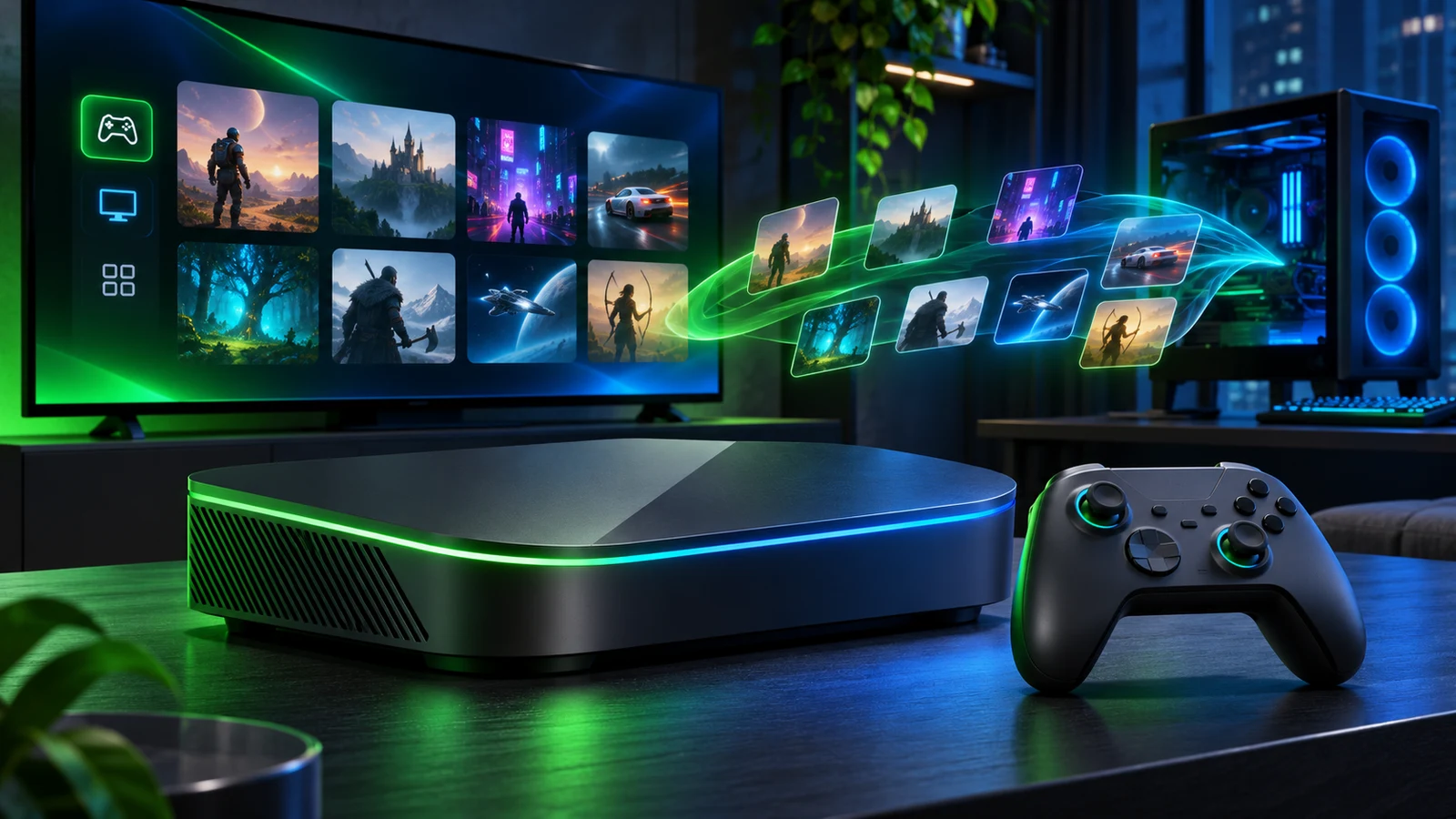
Microsoft has now described Project Helix as its next-generation Xbox console, but the most important detail is not a raw performance number. It is the promise that one device will play both Xbox console games and PC games while still behaving like a console when you turn it on.
That distinction matters for anyone deciding whether to buy an Xbox Series X|S now, build a gaming PC, or wait. It also adds context to Microsoft’s broader Xbox Play Anywhere strategy, which has already been blurring the line between console and PC ownership.
What Microsoft has actually confirmed
Microsoft first outlined Project Helix in an official Xbox Wire announcement on March 11, 2026. The company called it a next-generation first-party console built around a custom AMD system-on-chip. It also said the hardware would run Xbox console games and PC games, support four generations of backward compatibility, and go to developers in alpha form during 2027.
An Xbox 25th anniversary magazine feature published November 15 added the clearest explanation yet. Project Helix is being designed as a console first, not as a conventional Windows PC squeezed into a living-room box. Microsoft wants the startup, controller navigation, downloads, updates, and game launching to feel immediate, while advanced users can still adjust performance settings.
“Console first” is the key phrase
A normal gaming PC offers flexibility, but it can also demand mouse input, driver management, storefront decisions, and troubleshooting. A console hides most of that work. Project Helix appears intended to preserve that simplicity even though its software reach extends into PC gaming.
That does not mean every Windows program will automatically run on the machine. Microsoft has not published a full operating-system description, supported storefront list, or compatibility requirements. Steam, Epic Games Store, Battle.net, and other PC launchers should not be treated as confirmed merely because the system can play PC games.
The practical test will be whether a player can sit down with a controller and reach a PC title as easily as an Xbox game. If Microsoft achieves that, Helix could serve people who want the broader PC catalog without maintaining a full desktop setup.
Your Xbox library is supposed to carry forward
The strongest consumer-friendly commitment is continuity. Microsoft says Project Helix will support four generations of Xbox games and let players bring their library and progress forward. That is especially meaningful for digital purchases, saved progress, achievements, and long-running live-service games.
Still, backward compatibility rarely means every title ever released. Licensing, discontinued online services, peripheral requirements, and technical exceptions can limit individual games. Microsoft’s promise is substantial, but buyers should wait for an official compatibility list before assuming a specific favorite will work.
If you are comparing current hardware instead of waiting, our look at the Xbox Series X25 price and value covers the nearer-term choice.
What the graphics claims do and do not tell us
Microsoft has confirmed DirectX support, AMD’s FSR Next technology, and a major focus on neural rendering. It has also described an order-of-magnitude increase in ray-tracing capability. Those statements point toward machine-learning-assisted image quality and lighting, but they are not equivalent to independent frame-rate tests.
There is no confirmed GPU configuration, memory amount, storage capacity, power draw, or target resolution. A large ray-tracing gain also does not automatically mean every game will run at 4K and 120 frames per second. Developers, optimization, and visual settings will still matter.
Price and release date remain open
Microsoft has not announced a retail release date or a U.S. price. Alpha development hardware reaching studios in 2027 suggests the public launch comes later, but any more precise date would be speculation. There is also no confirmed list of launch games or retail models.
For now, the useful conclusion is simple: Project Helix is not being presented as “just a PC.” It is a console designed to preserve the Xbox experience while opening a controlled path to PC games. That could be a major shift, but the value proposition cannot be judged until Microsoft confirms the storefronts, compatibility rules, specifications, price in USD, and launch timing.