
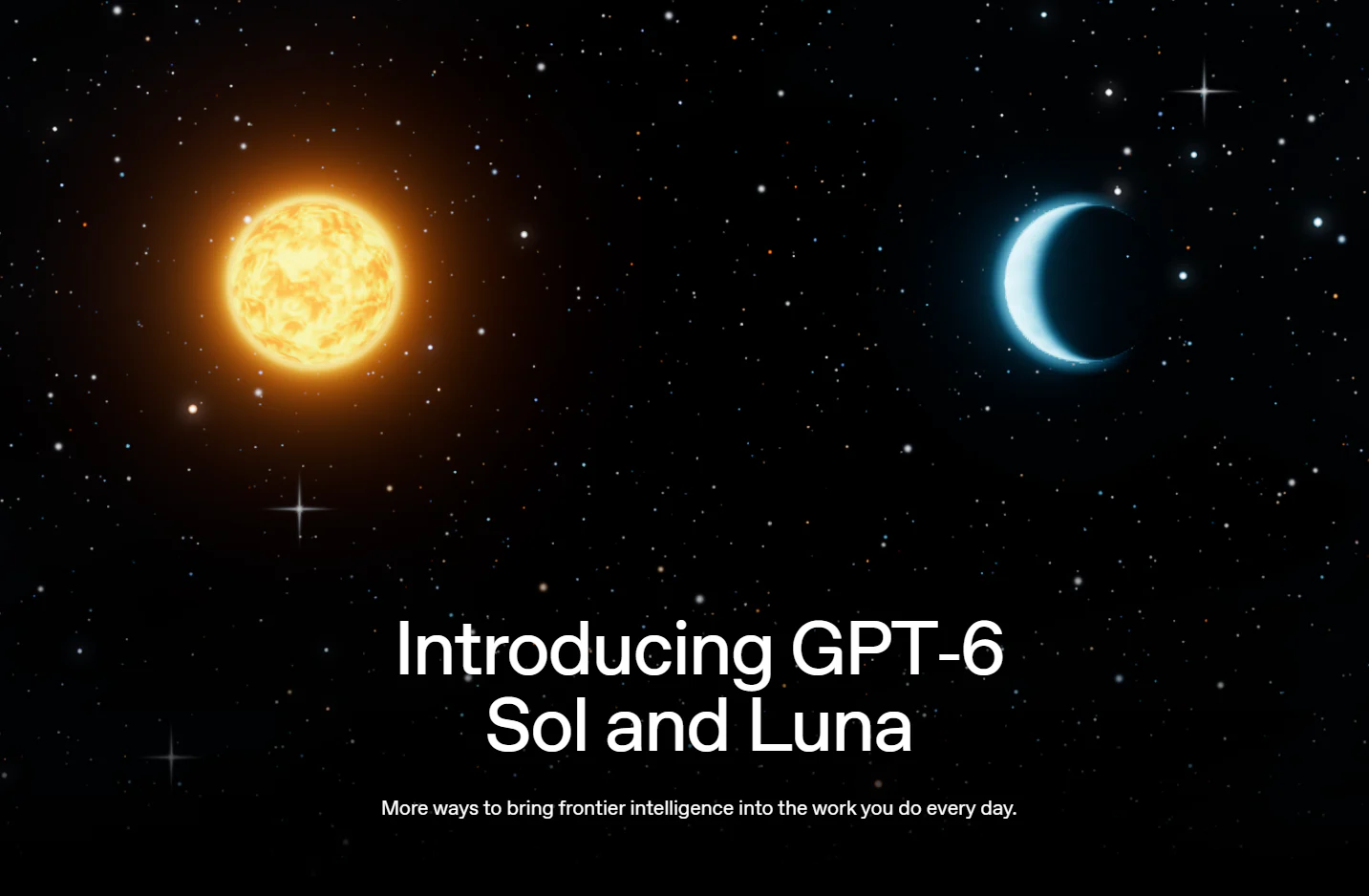
Choose GPT-6 Astra when you need OpenAI’s strongest model, Sol for difficult everyday work, and Luna for focused tasks where speed or volume matters. That is the simplest way to understand the three-model family, but the right choice also depends on how easy the answer is to verify.
A bigger model is not automatically the best tool for every job. If Luna completes a structured task accurately, switching to Astra may spend more of your available capacity without improving the outcome.
GPT-6 Astra is for the hardest and highest-stakes work
OpenAI describes Astra as its best model across the board. Use it when the task requires deep reasoning across many constraints, when ambiguity is difficult to resolve, or when a weak first attempt would be costly.
Examples include evaluating a complicated architecture, reconciling conflicting evidence, planning a sensitive migration, or reviewing a project whose constraints interact in subtle ways. Astra is also the logical escalation when Sol repeatedly misses a requirement after you have made the instructions clear.
That does not mean its output should be accepted without review. Higher capability reduces some kinds of failure, but it doesn’t turn model output into an authoritative source. Verify material facts and keep human approval around consequential actions.
GPT-6 Sol is the practical default for substantial tasks
Sol is the balanced model in the family. It is designed for difficult professional work, coding, computer use, and workflows that benefit from stronger reasoning without always requiring Astra.
Use Sol for writing and revising a detailed report, implementing changes across several code files, analyzing a dataset, or carrying out a multi-step task with tools. For many Plus users working in ChatGPT Work or Codex, it is the sensible first choice.
OpenAI reports that Sol makes about half as many mistakes as GPT-5.6 Sol on its internal factuality evaluation and shows substantial gains on coding benchmarks. These are useful signals, but the official GPT-6 model announcement also notes that research evaluations can differ from production products because tools and system prompts vary.
GPT-6 Luna fits focused and repeatable work
Luna is the lightweight option. It makes the most sense when the task is narrow, the format is clear, and you can check the result quickly.
Good candidates include classifying items, extracting fields from consistent documents, rewriting text to a specified length, producing routine summaries, or applying the same transformation many times. Luna can also be a smart first pass before sending only difficult cases to Sol or Astra.
Don’t confuse a lower-cost model with a careless one. OpenAI reports significant improvements over GPT-5.6 Luna, including stronger coding performance. The point is efficiency: reserve heavier reasoning for the work that benefits from it.
Use an escalation ladder instead of guessing
A simple workflow keeps model choice practical:
- Start with Luna for a constrained task with an obvious success test.
- Use Sol when the task spans several steps, sources, files, or judgment calls.
- Escalate to Astra when the problem remains unresolved, highly ambiguous, or unusually important.
You don’t need to repeat every task three times. Test representative examples, note where the lighter model fails, and create a rule for escalation. That produces a better decision than choosing a model solely from benchmark rankings.
Model choice and access are separate questions
As of the September 22 launch, Sol and Luna are available in ChatGPT Work and Codex for Plus, Pro, Business, Enterprise, and Edu users. They are not yet available in the regular Chat experience. Free and Go users can access Luna in the desktop app, according to OpenAI.
API pricing is separate from a ChatGPT subscription. OpenAI lists Sol at $2 per million input tokens and $10 per million output tokens, while Luna costs $0.10 and $0.50 respectively. Those numbers matter to developers running API workloads, not to a Plus user choosing an included model inside Work.
Don’t let a stronger model become an access shortcut
Changing models should not silently change permissions. An assistant that only needs to read a folder should not receive deletion or unrestricted upload rights because you switched from Luna to Astra.
Our guide to AI agent permissions explains how to separate capability from authority. If the assistant reads external webpages or documents, the guide to prompt injection explains why untrusted content should not redefine the task.
For most people, the final rule is simple: begin with Sol for meaningful work, use Luna when the task is narrow and repeatable, and keep Astra for the problems where its extra depth can genuinely change the result.